Eatonton Facade Grant Program

The Eatonton Main Street Façade Grant webpage is a helpful example for downtown programs looking to promote exterior rehabilitation and storefront improvement through a locally administered matching grant program. The page introduces Eatonton’s façade grant opportunity, which offers up to a 50% match for eligible exterior building improvements in the Main Street district, and encourages applicants to coordinate with the Main Street Manager before beginning work. It serves as a straightforward entry point for property and business owners seeking guidance on grant eligibility, process, and design expectations.

The linked application packet makes the resource especially useful for other communities because it goes beyond a basic program description and includes a full overview of objectives, eligible and ineligible improvements, reimbursement procedures, submission requirements, and review steps. It also outlines project caps by work type, eligibility standards for applicants and properties, application checklists, and preservation-oriented design guidance related to storefronts, masonry, windows, and overall historic character. Together, these materials make the page a strong reference for Main Street programs developing or refining a façade grant program with clear administrative procedures and design-sensitive standards.

Link: https://www.downtowneatonton.com/facade-grant
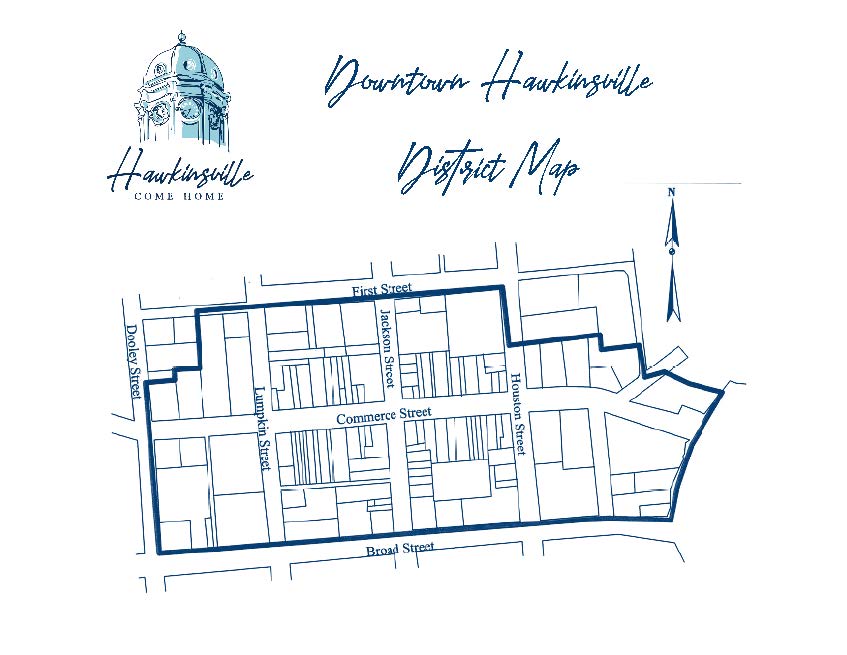

The Main Street Newnan Facade Grant Program webpage is a useful resource for downtown programs seeking examples of a small-scale exterior improvement grant initiative. The page outlines Newnan’s 50% matching facade grant program, with awards of up to $1,000 for eligible commercial properties within the Downtown Development Authority district. It provides an overview of program intent, eligibility, reimbursement procedures, and project requirements, making it a helpful reference for communities developing or refining their own facade assistance programs.

In addition to the program overview, the webpage includes links to supporting materials such as facade grant guidelines, downtown design guidelines, district mapping, application forms, and required E-Verify affidavits. Together, these resources make the page a strong example of how a Main Street program can organize grant information, design expectations, and application documents in one accessible location for property owners, contractors, and program staff.

Link: Main Street Newnan Facade Grant Program


Here’s an example blight tax ordinance in place by the City of Griffin, GA.


It is essential for Main Street program staff and board members to have a solid understanding of how to articulate the organization’s work to partners, funders, volunteers, and other potential stakeholders. Main Street America’s new Board Handbook explores how to craft a compelling and descriptive elevator pitch and talking points.

Saving Georgia’s Historic Resources from Disaster, a disaster preparedness guide from the Georgia Historic Preservation Division was  created in the aftermath of recent natural disasters, this handy guide has links to resources and information to keep in mind as you prepare, repair, and rebuild from disasters.

Topics include:

  • Preparedness
  • Rebuilding
  • The Power of Water
  • Devastating Fire and Smoke
  • Is It Time for Help?
  • Restoring Your Memories and Spaces
  • Need Help with Mold?
  • Navigating Your Insurance Claim

More information can be found on the DCA website here: https://dca.georgia.gov/public-notice/2025-07-31/saving-georgias-historic-resources-disaster-disaster-preparedness-guide


Strategies for Saving, Maintaining and Enhancing Our Downtown Architectural Assets 

By: Randy L. Wilson, President, Community Design Solutions  

In cities and towns of all sizes, municipal officials point to dilapidated structures as a challenge in their efforts to promote the highest possible quality of life and bring economic growth to their hometowns. The failure of offending property owners to repair or demolish dilapidated structures creates blight and a financial drain on community resources. It shifts the cost of abating violations from the responsible party to all taxpayers. 

Dealing with these unsafe commercial and residential structures is a challenging task that requires officials to consider and carefully balance the rights of the offending property owners with rights of the owners of adjacent properties and the community at large. Because of the wide array of situations encountered and sensitivity of the property rights issue, municipalities must have a variety of tools that can be selected and effectively applied to the specific circumstances of each code enforcement case. 

What’s Available 

Cities and towns can adopt ordinances relating to the upkeep of property. These ordinances may provide for notification to the owner outlining the conditions needing to be corrected and may require the owner to take the necessary steps to correct the conditions. The ordinances may also outline how the municipality may correct the conditions if the owner fails to take appropriate action. 

As with any ordinance, cities and towns must have procedures in place that provide for due process and proper notification to the property owner when the city moves to abate a problem. Likewise, any local ordinance needs to spell out explicitly the notice procedures, method of notice as well as a procedure for appeals of decisions made by the code enforcement officials. 

State law gives cities and towns the authority to enforce the International Building Codes and to adopt by reference certain appendices to this code. One of the most widely adopted appendices is the International Property Maintenance Code, which establishes standards to help ensure public health, safety and welfare of the community by requiring the maintenance of existing structures and premises. The International Property Maintenance Code provides a framework for dealing with dilapidated structures in any city no matter the size. 

The International Property Maintenance Code contains a prescribed and tested process of providing proper notice as well as a specific method of serving the notice to property owners. Because this code can be adopted by reference with only minor modifications, it is a good option for municipalities starting a new code enforcement program or looking to modify their existing program. A PDF version of this code may be found by following this link: 

https://www.dropbox.com/s/upw4ttgdgusxoz0/2012_International_Property_Maintenance_Code.pdf 

What happens when property owners fail to correct serious code violations? One option available to the municipality is to correct the violation. If the municipality corrects the unsafe conditions associated with the property, most state law allows the municipality to place a lien equal to the cost of the abatement on the property and collect the lien in the same manner as municipal taxes. 

Challenges
These code enforcement methods have limited effectiveness in certain situations. Liens on property generally can only be collected when a property is sold, and many county governments do not recognize code enforcement liens at tax sales. This means that liens might not be collected at tax sales. 

Another problem with liens is that there is often a significant lag between filing the lien and collecting payment because sales of dilapidated properties occur infrequently. Likewise, ordinance summons are not effective when a property owner cannot be located or lives outside of the community or state. Ordinance summons must be personally served upon the offender. 

These tools also have limited effectiveness when the property owner lacks the financial resources to abate the violations. Jailing offenders only increases the cost to the municipality and often fails to correct the violation. 

Clearly, there are no “silver bullet” solutions that can solve each unique situation in every community. However, all across America certain strategies for dealing with abandoned and dilapidated buildings have begun to gain traction in dealing with this issue. A few of these strategies are noted below. 

Adapted from December 2012 issue of Uptown, a publication of the Municipal Association of South Carolina 


Strategies for Abandoned and Dilapidated Buildings 

1. Early Warning Database 

Use an early warning database to identify problem properties and to facilitate collaboration. 

Too often, municipalities only find out about vacant properties after they have started to cause serious problems. An early warning database collects and organizes basic information about conditions that suggest a property is likely to become vacant. Local officials and organizations can use that information to identify at-risk properties and take action before a problem grows or gets out of control. A database can be useful for code enforcement officials, police and fire departments, community development departments, Main Street programs and neighborhood organizations. 

A database can be as a simple as a spreadsheet that lists problem properties and indicates whether each property has one or more of the key indicators of vacancy or abandonment, such as tax delinquency, nuisance abatement actions, utility shut-offs, or foreclosure filings. It can also be expanded to include information about the district where the property is located, such as demographic data, crime statistics, and real estate conditions. An even more comprehensive database could include information about these properties from various municipal departments. Many municipalities already collect much or all of the information in a basic database, and it is just a matter of putting that information together in one place. Even the most simple database can be used to identify problem properties and neighborhoods, guide decision making, and coordinate activity across municipal departments. 

Key Benefits:
Identify problem properties 
A database helps a municipality identify properties that are vacant or at risk for vacancy, making it possible to intervene early and avoid more serious problems for the property. 

Coordinate municipal action 
A database helps a municipality share critical information with various local government departments and other key stakeholders and use it to coordinate action and facilitate collaboration.3 


2. Minimum Maintenance Ordinance 

Use a minimum maintenance ordinance to provide an objective, district-wide standard of care for properties. 

The failure to maintain property directly impacts property values of adjacent property and, in the worst case, can provide an area that attracts criminal activities. To protect a district from deterioration, a number of local governments have established property maintenance standards. There is a limit, however, on how far a jurisdiction may go in regulating unsightly areas on private property. It is an open question in many states whether their courts would uphold a beautification ordinance or a property maintenance or appearance code if the regulation is based purely upon aesthetic grounds. 

The premise is that failure to provide minimum maintenance creates unsanitary and unsafe conditions, negatively impacts the aesthetic value of the community, and reduces property values. Local governments considering property standards need to work with legal counsel to make sure that the necessary procedural requirements are included in any public nuisance or property maintenance ordinance and that staff responsible for enforcement receive the necessary training. 

The hardships encountered when enforcing MMOs are typically two-fold. First, the local government lacks the political will or manpower to enforce the ordinance. Second, the municipality lacks the funding required to enforce the ordinance by providing temporary clean-up and/or stabilization and weatherization measures. 

Key Benefits:
Objective standards
Every property owner is held to the same standard of care. This should hopefully address concerns that enforcement is due solely on the grounds of subjective aesthetic standards. 

Legal authority 
Assuming due process and clear communications are in effect, a MMO provides solid legal grounds for enforcing upkeep on any individual property for the sake of the community good in terms of safety and welfare. 


3. Visual Enhancement Treatments 

Use visual enhancement treatments as a temporary means of improving the appearance of a building while it is being prepared for occupancy or sale. 

The appearance of vacancies in the downtown area can send a negative message and create the perception of a lack of retail vibrancy. To combat those perceptions and “buy time” until a building becomes occupied, any of the approaches noted below and illustrated at right can be considered. 

Place artwork in vacant display windows if the interior space appearance is satisfactory. If the interior space is in detrimental condition, consider masking the windows from the interior with butcher paper or from the exterior with vinyl cling wraps. The masks can feature nostalgic photos or historic postcards of the community or images such as a map of downtown highlighting shopping and dining destinations. Place “community hero” posters in the windows to build community pride and draw attention away from the vacant building. 

Key Benefits:
Inexpensive 
The above-noted techniques are inexpensive yet can reap significant visual rewards and temper perception of the district while buildings are being rehabilitated or sold. 


4. Financial Incentives 

Use financial incentives to stimulate private sector building renovation investment. 

While it can be argued that a property owner that has neglected their property should not be rewarded with a financial incentive, by the same token, the economic and community benefit derived from an improved building typically outweighs perceived injustices. There are a whole host of potential incentives that can be brought to bear on this issue. Some of the most common and strategic methods are noted below. 

Facade Grants: Either single components (e.g. signs, awnings, paint) or overall facade grants can motivate an owner to enhance their building. 

Historic Preservation Tax Credits: Qualifying buildings are eligible for either 10% or 20% federal tax credits while many states match the federal credits up to 25%. 

Tax Abatement: This strategy freezes the taxable rate at the pre-renovation value so that improvements to the building do not render an immediate spike in property taxes. 

Key Benefits 
Gap financing
Sometimes these financial incentives are the difference between rehabilitating a building or letting it sit vacant. Through a nominal incentive from the public sector, the private sector might be motivated to invest in the renovation of an otherwise marginal property. 


5. Vacant Building Registry 

Use a vacant building registry to motivate owners to maintain buildings and return them to productive use, identify the party responsible for problem properties, monitor vacant properties, and defray costs of providing related municipal services. 

A vacant building registry is an ordinance that requires owners (and, in some cases, financial institutions with an interest in a property) to register vacant buildings with a municipality. Effective registry programs also require registrants to pay a fee at regular intervals, which defrays the additional costs of providing municipal services associated with such properties. Fees also create a strong financial incentive for owners to secure and maintain vacant property and return it to productive use. Effective programs require registrants to provide 24- hour contact information, which makes it easier for a municipality to contact the owner or the owner’s agent if there is a problem with the property. Some registry programs go further and include provisions that compel registrants to maintain, secure and insure vacant properties, and prepare and implement plans to return them to productive use. Good registry programs are implemented in conjunction with strong code enforcement and often include steep fines for noncompliance. A model Vacant Building Ordinance from Emporia, Kansas may be found at the following link: http://www.communitydesignsolutions.com/public/VBO_Emporia_Kansas.docx 

Key Benefits
Motivate owners 
Code enforcement alone isn’t always enough to motivate owners to maintain vacant properties. Vacant building registries usually require payment of fees, and these added costs create an additional incentive for owners to maintain their properties. 

Identify responsible parties to contact if there is a problem 
Municipalities can use the information collected in the registry to contact the party responsible for a property if there is a problem. 

Defray costs 
Revenue generated from registration fees helps cover costs incurred by municipalities in monitoring vacant properties and enforcing vacant property requirements. 5 


6. Receivership 

Ensure that someone with the necessary expertise and resources repairs or rehabilitates a vacant property. 

Receivership is a powerful but infrequently used tool for ensuring that seriously troubled properties are repaired or rehabilitated. Receivership is sometimes used as a last resort when other strategies, like traditional code enforcement, don’t motivate an owner to perform necessary maintenance and repairs and a property is a danger to the community. If a property is not being properly maintained, a municipality can go to court and seek to have a receiver appointed to take care of the property. If the court appoints a receiver, this third party is authorized to act as if it owns the property. The receiver can take any step the court authorizes to repair or rehabilitate the property. 

Receivers can finance the work with cash loans from banks or the municipality. In exchange, the receiver gives the lender a special certificate, which basically guarantees that it will get the full value of the loan back with interest. If the owner of the property doesn’t pay back the receiver’s loan with interest, the certificate becomes a lien on the property, which must be paid back before all other encumbrances on the property except taxes. This process provides the receiver with funds needed to repair the property and allows the bank or municipality financing the repairs to make a profit on its loan. 

Key Benefits 
Repair and rehabilitate vacant property 
When other methods fail to motivate an owner to maintain a property, this process, enabled by state law, can give a receiver powerful tools to ensure that troubled properties are repaired or rehabilitated. 

Pay for repairs and rehabilitation 
It is often difficult to get financing to repair or rehabilitate a vacant property. The recivership process, if enabled by state law, gives receivers this critical tool to finance such repair activity. 

Property owner rights
Since the property owner may retrieve the property at any point in the process by reimbursing the receiver for all costs associated with the project, the issue of property takings is addressed. 


7. Acquisition or Demolition 

Acquire properties to stabilize or rehabilitate individual properties or to redevelop an entire area or district in communities with large numbers of vacant properties. Demolish vacant properties that pose significant danger to the community and cannot be adequately addressed in any other way. 

Acquisition: In districts where property values have fallen significantly, owners and private investors may not take proper care of a property. This neglect can cause problems for adjacent properties, and the problems can begin to spiral out of control. In situations where the private market has little incentive to act, the best alternative may be for a municipality to acquire properties. 

The municipality can act aggressively (especially if it possesses a Community Devleopment Corporation or a Redevelopment Authority) to improve a single property that is causing problems, or to improve several properties in an effort to redevelop a larger area. Municipalities can acquire properties individually or as part of a coordinated acquisition and redevelopment strategy. Where downtown stabilization or revitalization efforts require acquisition of larger numbers of properties, land banks have proven to be a very effective strategy. Though acquiring properties can be a useful and powerful tool, it is not a quick solution to a pressing problem—the process often takes a very long time. 

Demolition: When a property is causing very serious problems that present a danger to the surrounding community, and the owner is not taking necessary steps to address the problem, a municipality may initiate demolition proceedings. After complying with procedures specified by state law and/or municipal ordinance, the municipality can demolish the property. 6 

While the preservation of a downtown’s architectural assets –especially its historic buildings– is of paramount importance, occasionally the demolition of a delinquent building may cost a municipality less than taking care of a troubled property. What’s more, under some circumstances, a municipality can recover the costs associated with the demolition. Carefully targeted demolition can help stabilize property values in the surrounding community and help lay the foundation for redevelopment. 

Key Benefits: Acquisition
Return properties to productive use
By acquiring vacant properties that have no near-term prospect of being redeveloped by the private market, municipalities can return them to productive use, helping to stabilize communities more quickly. 

Promote redevelopment 
Property acquisition allows municipalities to reshape an entire district. 

Key Benefits: Demolition
Remove blight 
Demolishing seriously troubled buildings can help stabilize or improve struggling districts. Demolition may be the best option when vacant properties are hurting the community around them and nothing else can restore the property to productive use. 

Prompt owners to take responsibility 
Sometimes a threat by the municipality to demolish a property compels recalcitrant owners to take responsibility for troubled properties. 

Minimize municipal costs 
While demolishing a building is expensive, it is sometimes less expensive in the long run than incurring all of the municipal costs associated with taking care of a troubled building. 


8. Land Value Tax 

A land value tax is a tax that is assessed on the value of a piece of land, rather than the value of the buildings that sit on it. Under a land tax, you are effectively taxed on the value of your location, which is mostly a result of what is nearby. 

In contrast, in most American cities, property taxes are assessed on both land and buildings (“improvements”). Taxing improvement value acts as a disincentive to put land to productive use—since by increasing the value of your building, you will also increase your tax liability—and encourages land speculation. Taxing only land, or mostly land, helps resolve these issues. 

An informative article and video that explains the Land Value Tax by the professionals at Strong Towns may be found at: https://www.strongtowns.org/landvaluetax 


Source:
Randy L. Wilson
2307 Lincoln Street
Columbia, SC 29201
803.240.9050
randy@communitydesignsolutions.com
creative services for community building 


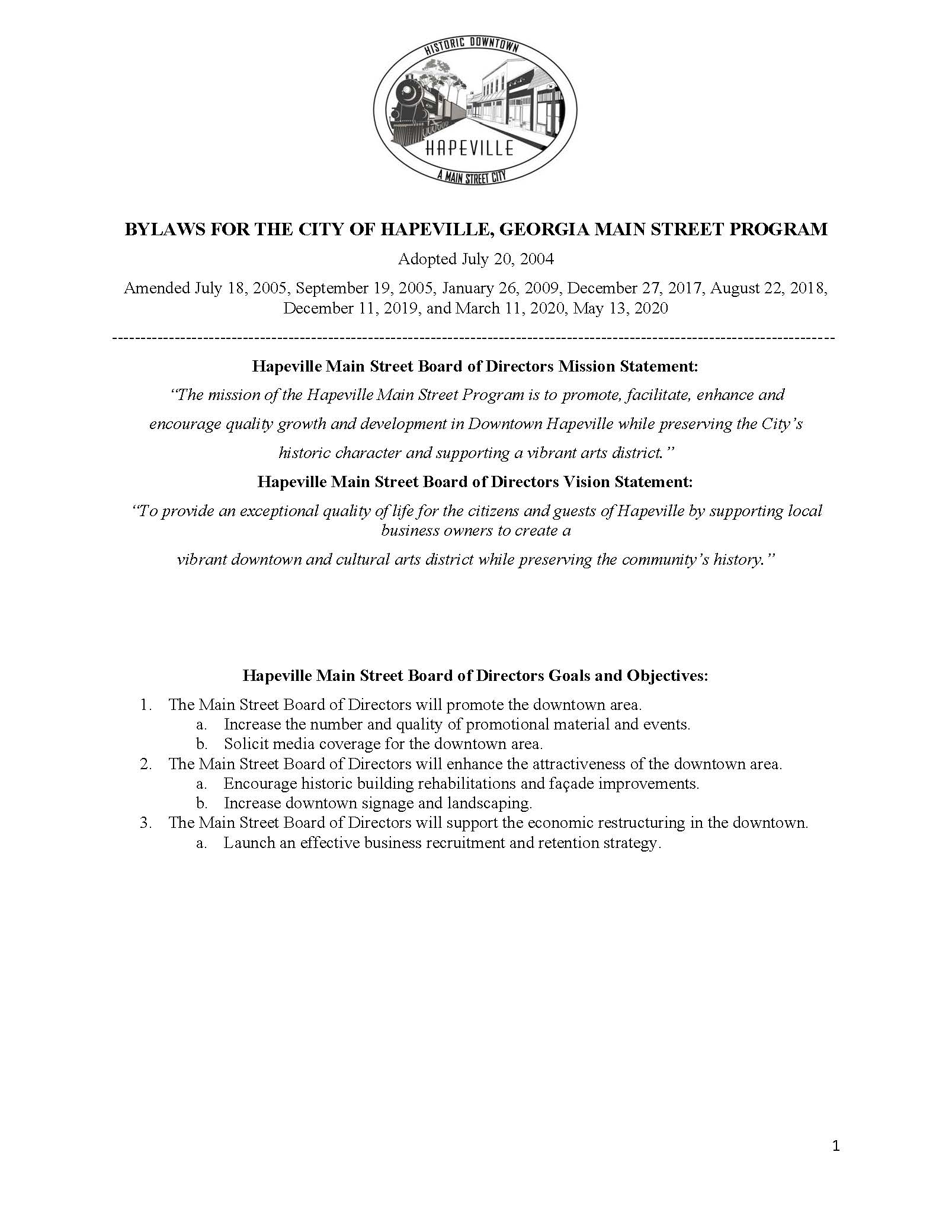
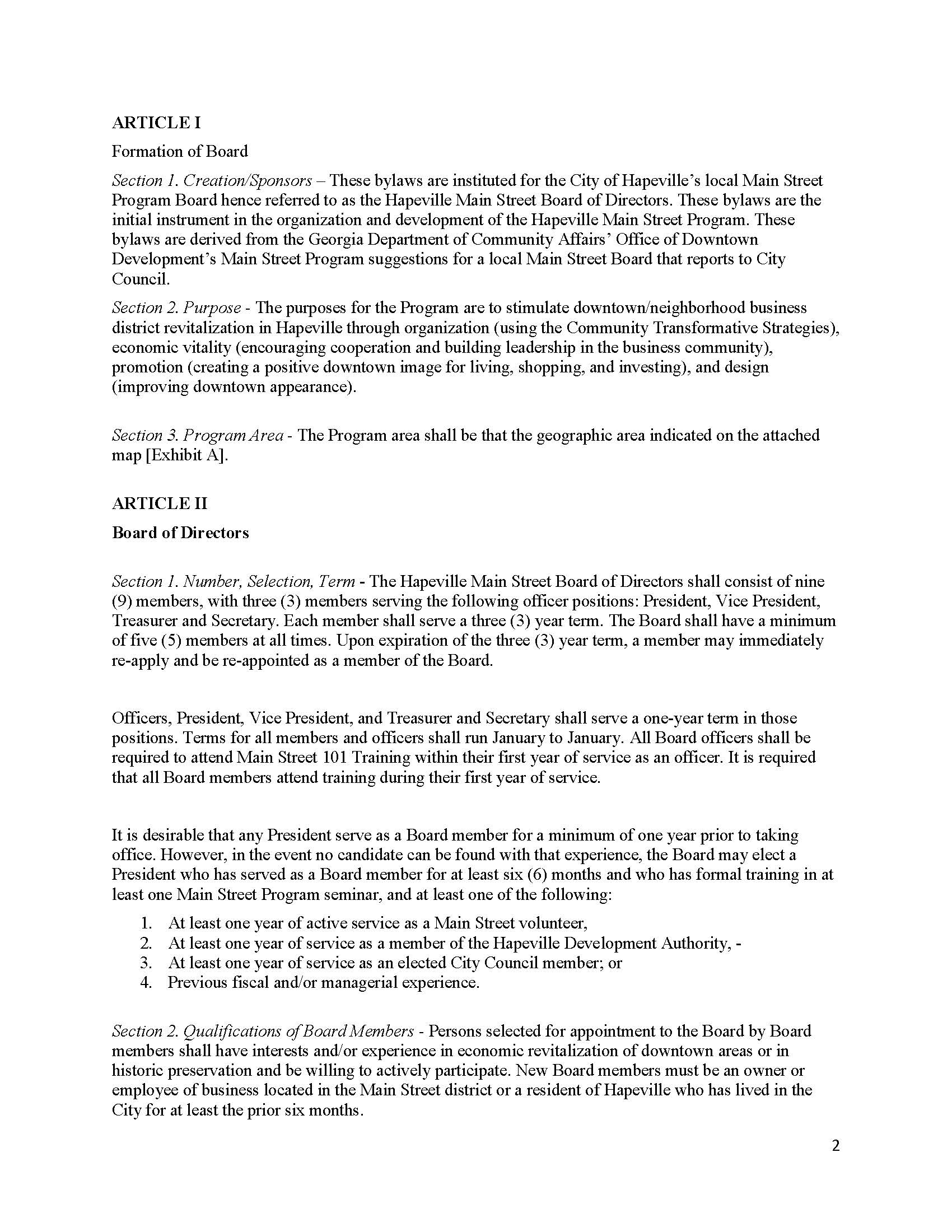
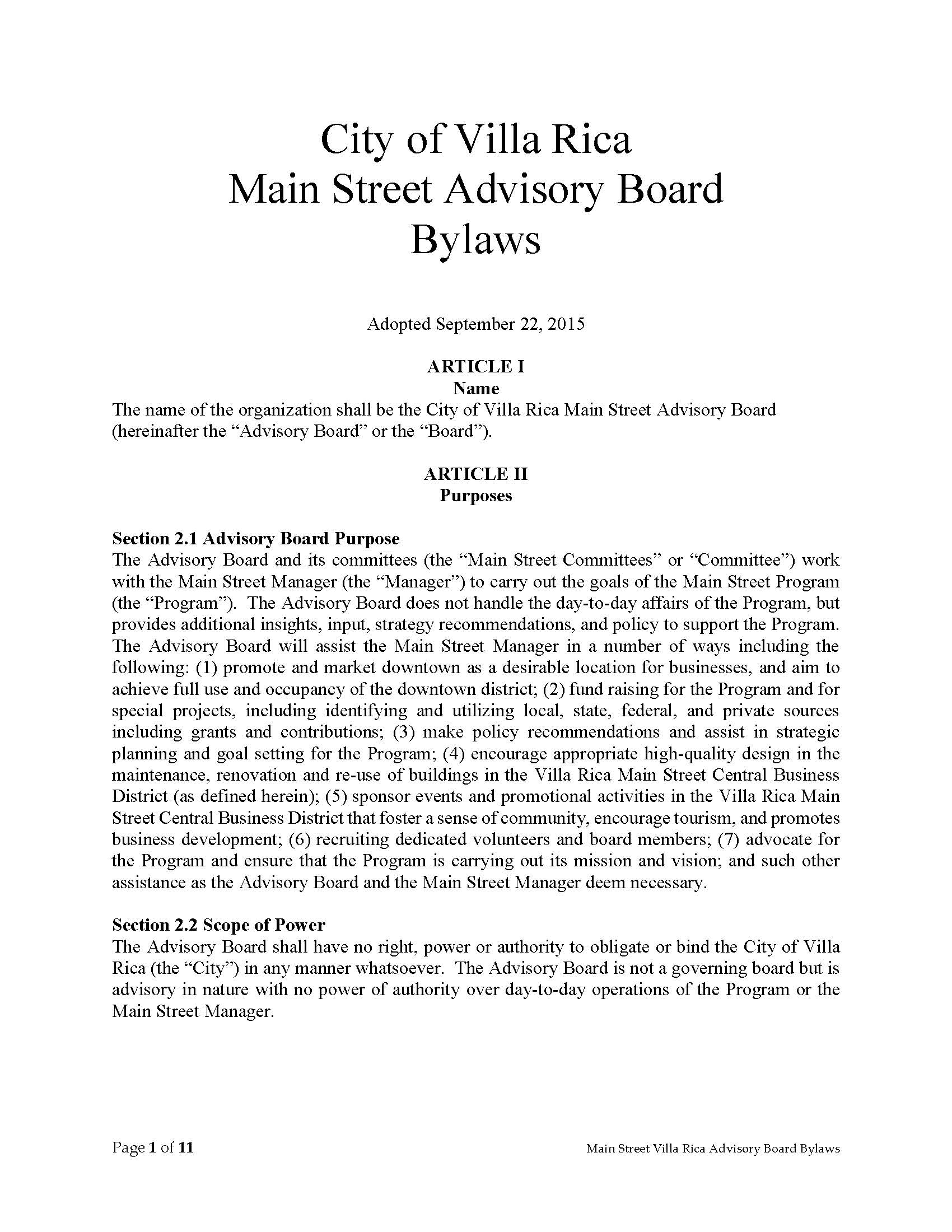
Click on the “Download” button below to access a pdf version of the entire bylaws document.


Click on the “Download” button below to access a pdf version of the entire bylaws document.


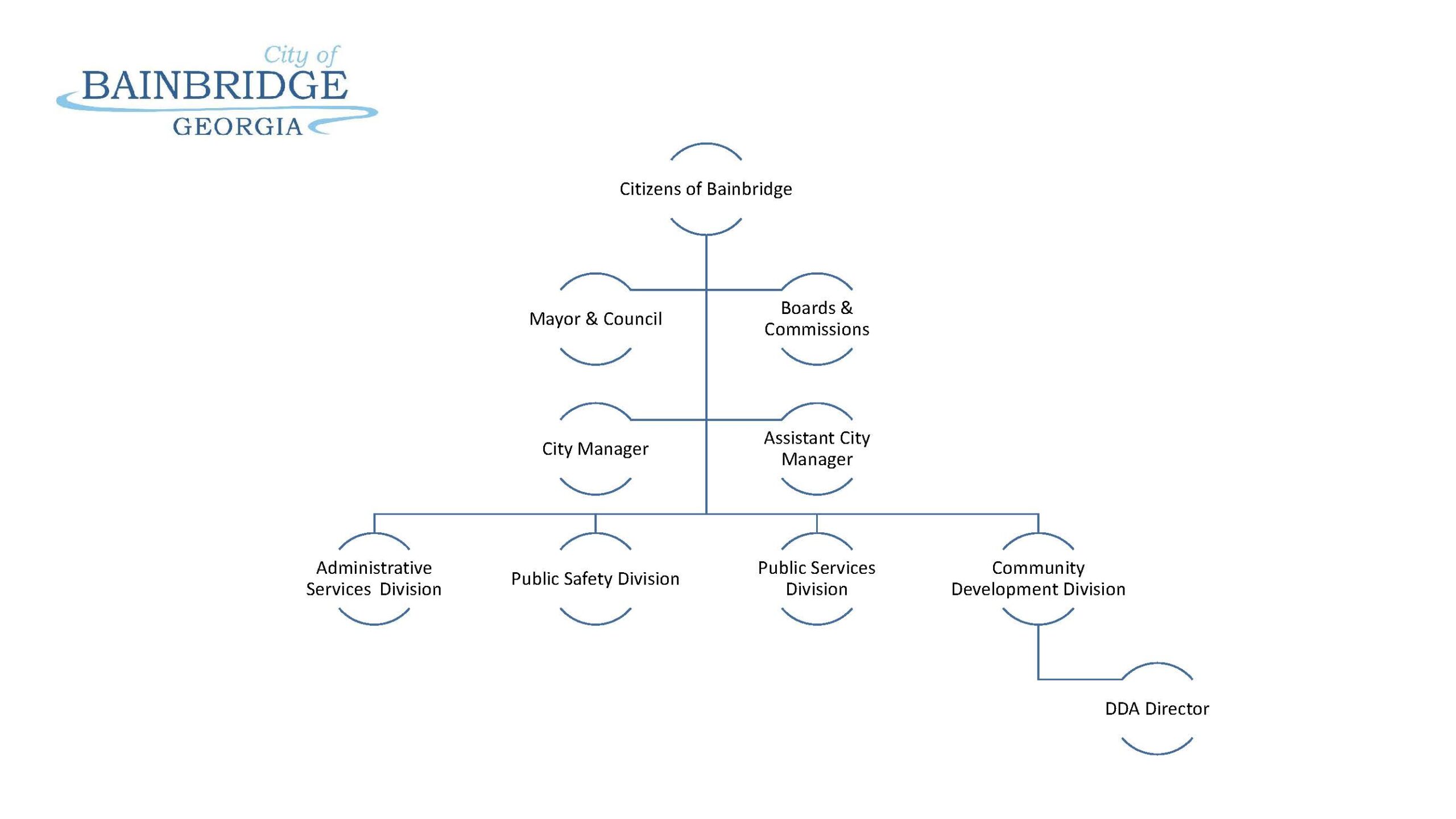
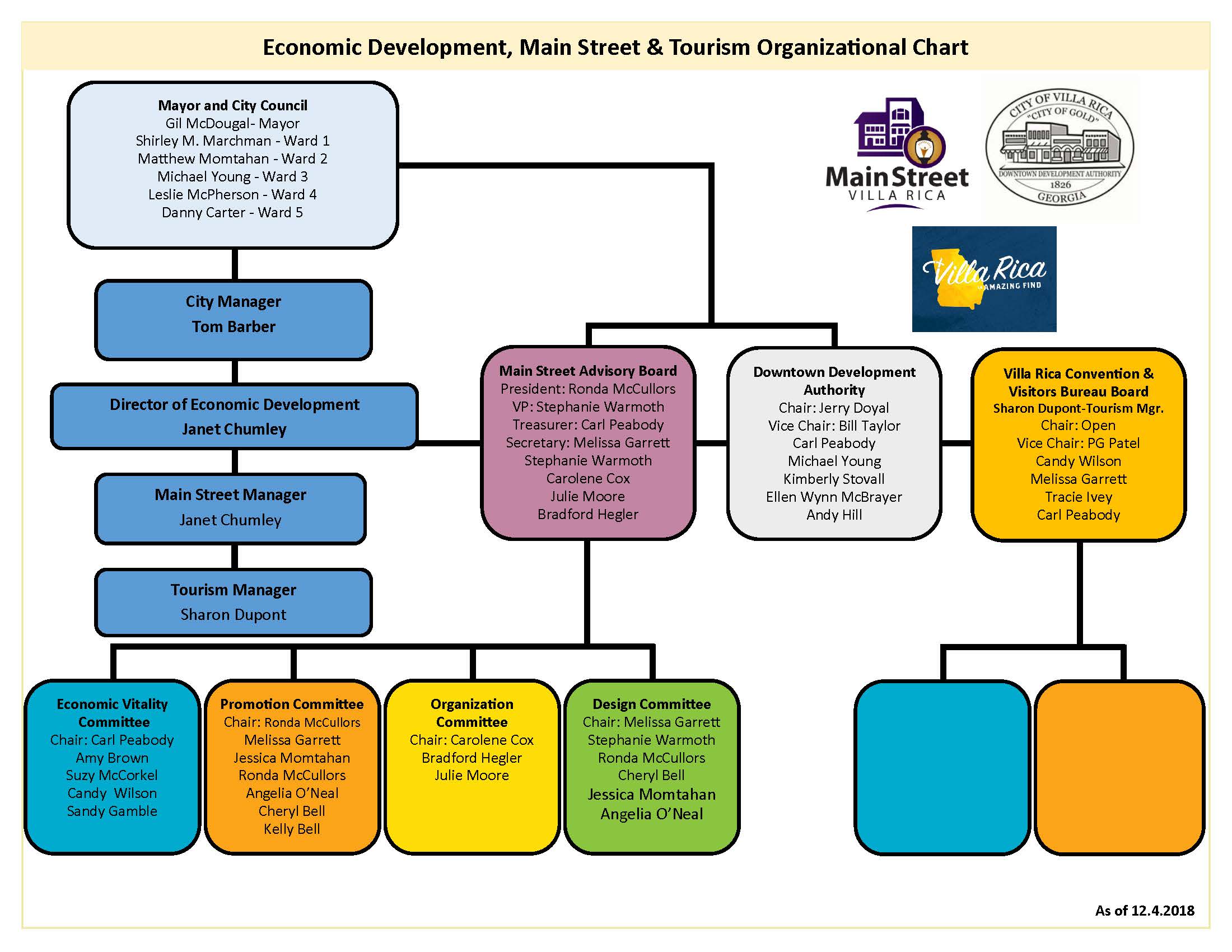
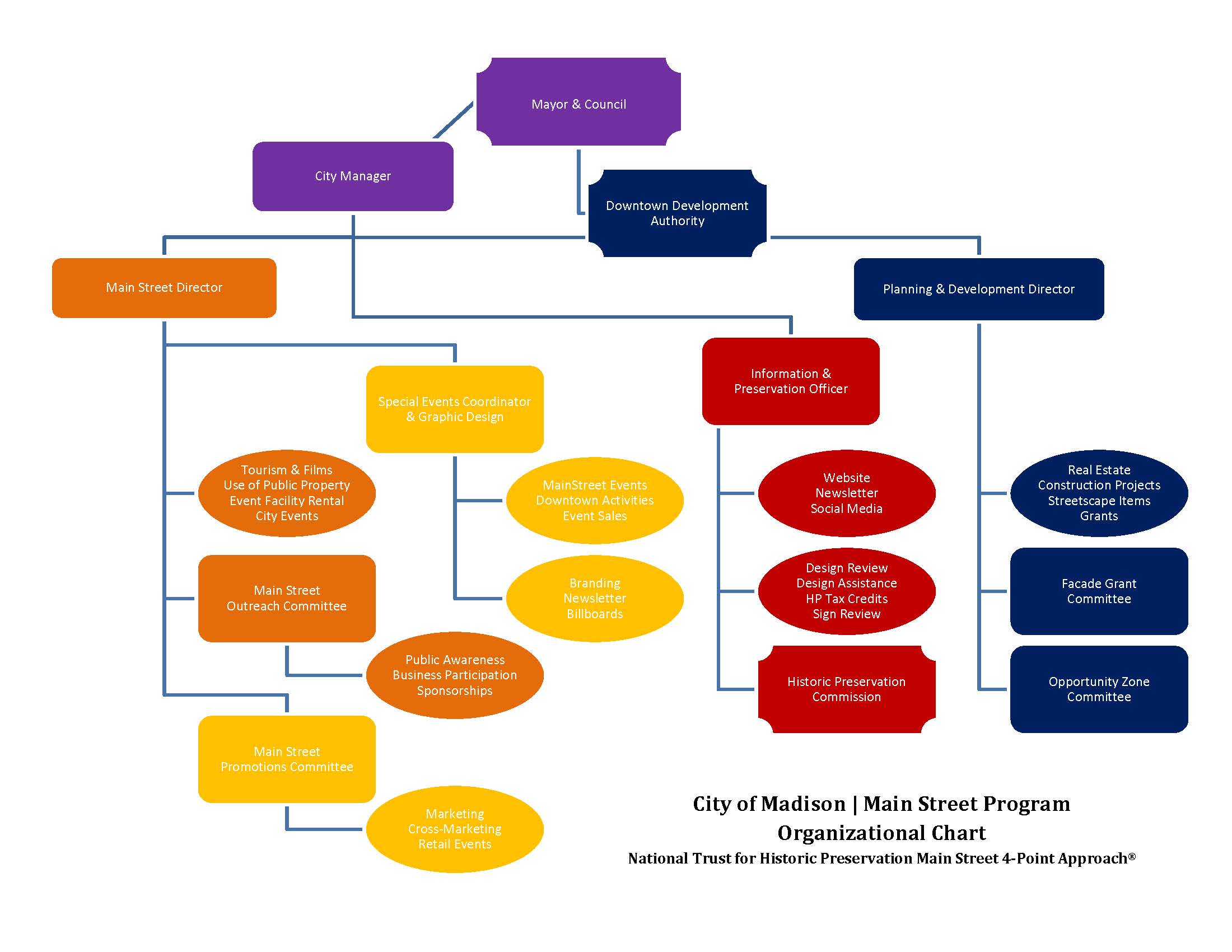
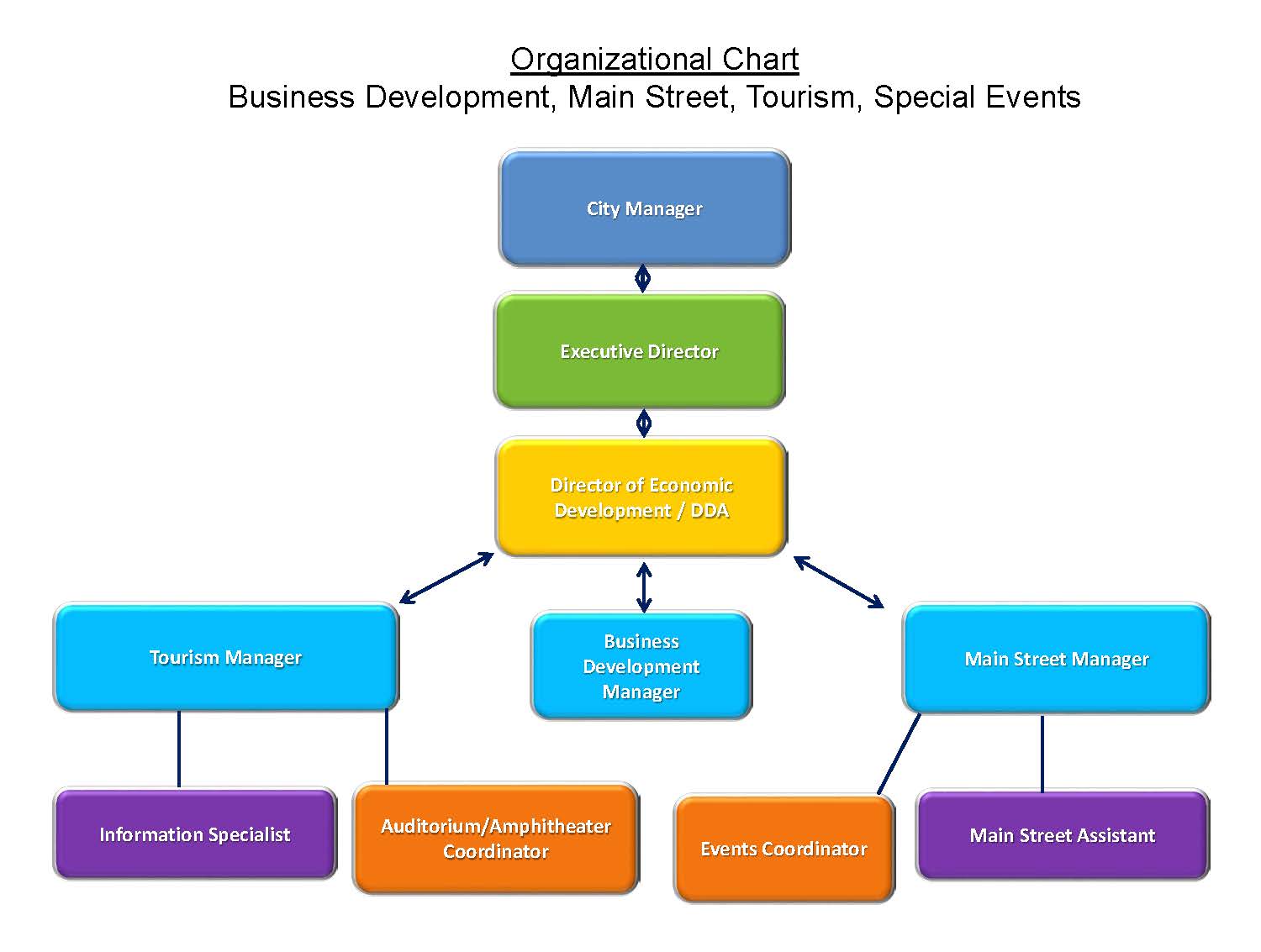
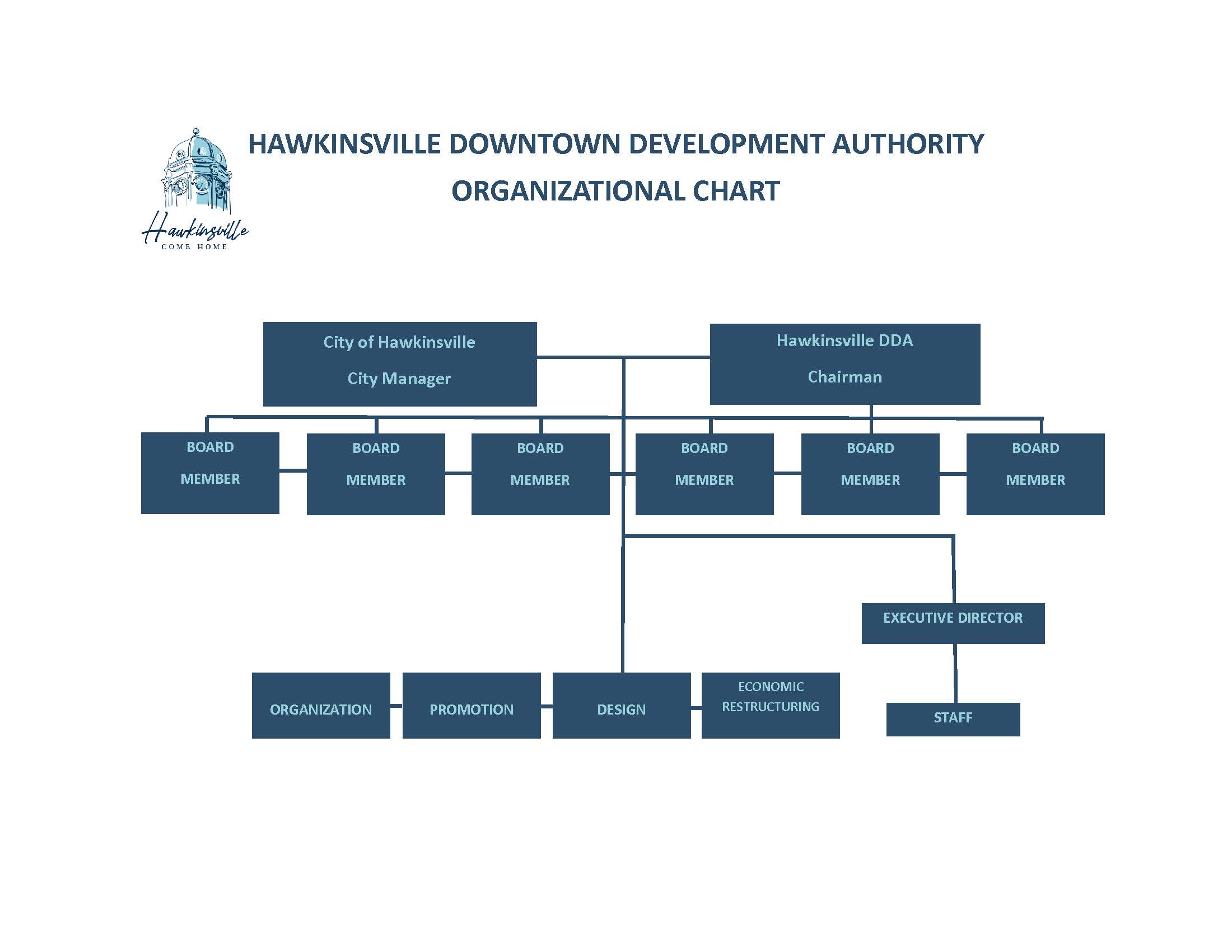
The organization chart is a diagram showing graphically the relation of one official to another, or others, of a company. It is also used to show the relation of one department to another or one function of an organization to another. This chart is valuable in that it enables one to visualize a complete organization, by means of the picture it presents.

A Main Street Programs organizational chart typically illustrates relations between people within the Main Street organization in relation to the city as well as the Board of Directors. Such relations might include managers sub-workers, directors to managing directors, officers of various departments or committees, and so forth. When an organization chart grows too large it can be split into smaller charts for separate departments within the organization. Below is an example of an Organizational Chart that can be modeled to fit your community.


Submitting monthly economic impact reports to the Office of Downtown Development will be one of the most important responsibilities asked of you as a Main Street Manager.  In Georgia, monthly reporting is required for all Main Street Georgia communities, regardless of your community’s individual designation. Each Main Street program will have 30 days from the last day of the month to submit their previous month’s report. The easiest way to think of it is that we are always reporting a month behind, because you can’t report on something that hasn’t happened. For example, January’s report is due in February, and February’s report is due in March. Any report submitted after 30 days will be considered late.

But why is reporting important? Monthly reports allow us to capture and economic snapshot of what is happening at this particular moment in time in your community. As a stand alone report it doesn’t tell us much, but when we compile months or even years worth of data together we can begin to see trends in business development, job growth, private and public investment. These reports can help us as an office see where the communities priorities lie and identify gaps in funding or resources.

If you have questions regarding any of the information submitted, or if you need to adjust your information please reach out to Ellen Hill at ellen.hill@dca.ga.gov and she will be happy to assist you.

We know that Monthly Reporting can be complicated work, we also know that everyone has different learning styles. It is for this reason we have developed two resources to help guide you through the monthly reporting process. The below video will walk you through how to complete the monthly reports, step by step, using a pre-recorded webinar.


For those who feel more comfortable learning through reading we have developed a Monthly Community Activity Report Guide that will take you step by step through the reporting process but can be read instead of watched. There is also a copy of this document available for download using the link below.


Dealing with Vacant Properties

Using a vacant building registry can help motivate owners to maintain buildings and return them to productive use, identify the party responsible for problem properties, monitor vacant properties, and defray costs of providing related municipal services. 

A vacant building registry is an ordinance that requires owners (and, in some cases, financial institutions with an interest in a property) to register vacant buildings with a municipality. Effective registry programs also require registrants to pay a fee at regular intervals, which defrays the additional costs of providing municipal services associated with such properties. Fees also create a strong financial incentive for owners to secure and maintain the vacant property and return it to productive use. Effective programs require registrants to provide 24- hour contact information, which makes it easier for a municipality to contact the owner or the owner’s agent if there is a problem with the property. Some registry programs go further and include provisions that compel registrants to maintain, secure, and insure vacant properties and prepare and implement plans to return them to productive use. Good registry programs are implemented in conjunction with strong code enforcement and often include steep fines for noncompliance. A model Vacant Building Ordinance from Emporia, Kansas may be found at the following link: http://www.communitydesignsolutions.com/public/VBO_Emporia_Kansas.docx 

Key Benefits
Motivate owners 
Code enforcement alone isn’t always enough to motivate owners to maintain vacant properties. Vacant building registries usually require payment of fees, and these added costs create an additional incentive for owners to maintain their properties. 

Identify responsible parties to contact if there is a problem 
Municipalities can use the information collected in the registry to contact the party responsible for a property if there is a problem. 

Defray costs 
Revenue generated from registration fees helps cover costs incurred by municipalities in monitoring vacant properties and enforcing vacant property requirements.


An example Vacant Property Registration Ordinance from Powder Springs is accessible by clicking on the “Download” button below.